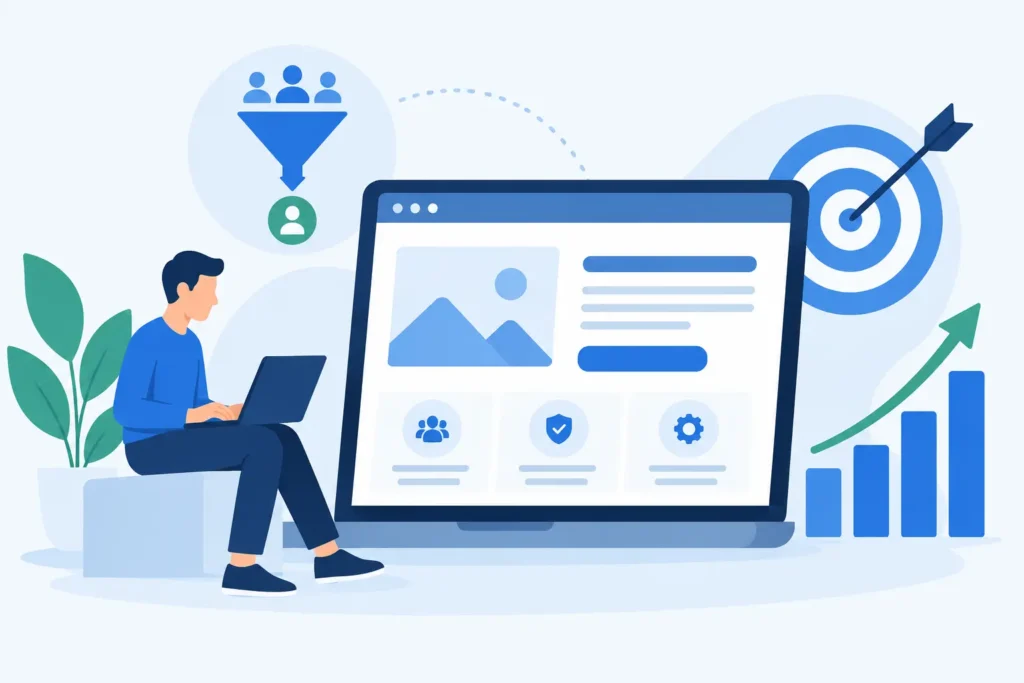

A strong service page can explain exactly why a buyer should choose you. A technically sound website can make that page easy for Google to crawl, index, and understand. But when competitors have comparable content and stronger authority, they often win the click. Link building is how businesses earn the third-party signals that help their best pages compete for valuable search demand.
For growth-focused companies, this is not a numbers game and it is not a separate SEO checkbox. Effective link building supports a larger system: technical performance, useful content, clear conversion paths, and ongoing measurement. The goal is not merely to increase a domain metric. The goal is to attract qualified traffic that turns into leads, sales, and revenue.
What link building actually does
A backlink is a link from another website to yours. Search engines use backlinks as one of many signals when evaluating whether a page is credible and useful for a query. A relevant editorial mention from a respected industry publication can reinforce the value of your site far more than dozens of low-quality links from unrelated directories.
Authority is not transferred in a simple, fixed ratio. Search engines assess context: the linking site, the page where the link appears, the relevance between both businesses, anchor text, placement, and the broader pattern of links pointing to a domain. That is why buying bulk links rarely creates durable gains. It can also create risk when the pattern looks manufactured.
The practical benefit is broader than rankings. A credible mention can send referral traffic, introduce a new audience to your brand, and give prospects added confidence before they convert. The best links earn visibility from both search engines and real people.
Link building works best when the foundation is ready
Many companies start outreach before their website has something worth promoting. That creates a predictable problem: publishers have little reason to reference a thin service page, a generic blog post, or a slow website that does not demonstrate expertise.
Before investing heavily in acquisition, make sure the destination pages are doing their jobs. Key service and category pages should explain the offer clearly, answer buyer questions, show proof, and provide a logical next step. Technical issues such as poor internal linking, indexation errors, duplicate pages, and slow load times should be addressed as well. Links can increase a page’s opportunity to rank, but they cannot consistently compensate for weak relevance or poor user experience.
Content matters here, but not every asset needs to be a 3,000-word guide. A useful benchmark report, original data point, expert commentary, practical calculator, detailed case study, or well-framed industry resource can be more promotable than another broad article targeting a crowded keyword. The right asset depends on what your market discusses and what information journalists, partners, and customers genuinely need.
Prioritize relevance before volume
A common reporting mistake is treating every backlink as equal. It is easy to show a growing total link count. It is harder, and more valuable, to show that the business is earning mentions from websites that overlap with its customers, industry, geography, or commercial topic.
For a B2B software company, a mention in a respected operations, technology, or trade publication may be highly relevant. For an ecommerce brand, links from product reviewers, lifestyle publishers, and niche communities may be more appropriate. A local service firm may benefit from regional media, trade associations, and local partnerships. The right mix depends on the market and the pages you need to grow.
Relevance should also shape the page receiving the link. Sending every external link to the homepage leaves opportunity on the table. A natural campaign can strengthen a research resource, a product category, a location page, or a service guide, then let internal linking distribute value to related commercial pages. This creates a cleaner connection between authority-building activity and business priorities.
The link building methods worth investing in
The most reliable approaches create a legitimate reason for another site to mention you. Digital PR is one of the strongest examples. It starts with a useful story, an original finding, a timely expert perspective, or a distinctive resource, then places that idea in front of relevant journalists and editors. The link is a byproduct of contributing something worth publishing.
Partner and relationship-based outreach can work well when it is honest and specific. Suppliers, industry platforms, professional associations, event organizers, complementary service providers, and clients may have valid opportunities to feature your expertise or work. A partner page, member profile, case study, event recap, or expert contribution can be valuable when it serves the audience rather than existing solely for SEO.
Thoughtful contributor content has a place too. The standard should be high: publish on relevant sites, bring a real point of view, and avoid repetitive, keyword-stuffed articles written only to insert a link. A useful contribution builds brand credibility even if the link is nofollowed or omitted. That is a healthy test of whether the placement has real marketing value.
Broken-link outreach, unlinked brand mention recovery, and resource-page inclusion can also produce wins. They are usually more tactical and less scalable than PR-led campaigns, but they can be efficient when built around genuine relevance. The key is to offer a clear improvement to the publisher, not a generic request sent to hundreds of inboxes.
What to avoid when building authority
Cheap link packages often promise fast results because they rely on sites created to sell links, irrelevant placements, automated outreach, or private networks. These tactics may create a short-term metric increase, but they do not build a brand asset. At worst, they introduce a backlink profile that requires cleanup and makes future SEO work harder to evaluate.
Be cautious with exact-match anchor text as well. If every acquired link uses the same commercial phrase, the pattern can look unnatural. In real editorial coverage, anchors vary. They may use your brand name, a URL, a descriptive phrase, or the title of a resource. Natural variation is not a weakness. It is a sign that the link earned its place in the content.
Avoid measuring success solely through authority scores from third-party tools. These scores can help compare trends, but they are estimates, not Google’s internal measurement. A campaign should be judged by the quality and relevance of referring domains, improvements in target-page visibility, organic sessions, assisted conversions, and eventually revenue.
Build a measurement system that connects to revenue
Link building has a longer feedback loop than paid media. A placement may be secured this month, crawled later, and contribute to ranking improvements over the following months. Results also depend on competition, content quality, site history, and technical health. No credible partner should promise a specific ranking by a specific date.
That does not mean reporting should be vague. Set a baseline before the campaign begins: target keyword positions, organic landing-page sessions, conversion rates, qualified leads, revenue where available, referring domains, and the quality of existing links. Then report progress at two levels. The first is leading indicators, such as earned placements and relevant referring domains. The second is business impact, including visibility, traffic, leads, and sales from the pages that matter.
At 3Q Studio, this work is most effective when it operates alongside technical SEO, content production, conversion optimization, and analytics. A link can help a page earn more visitors. A fast, focused, conversion-ready page gives those visitors a reason to act. Growth compounds when both parts are managed together.
Set expectations for a compounding channel
A new domain, a highly competitive industry, or a weak existing content library may require a longer runway. Established businesses with strong resources and relationships may earn meaningful placements faster. Seasonality, news cycles, and publisher editorial standards also affect pace. The right expectation is consistent progress, not instant authority.
Start with the pages closest to commercial value, identify the evidence and stories your market will care about, and build outreach around real relevance. Then keep improving the website those links point to. When authority, content, technical SEO, and conversion strategy reinforce one another, link building stops being an isolated tactic and becomes part of a revenue engine built to grow over time.