
A keyword list is not a growth strategy. It is simply a collection of search terms until you connect it to the pages, offers, buyer stages, and conversion paths that produce revenue. Knowing how to create a keyword strategy means making deliberate decisions about where your business can win in search and what each ranking is expected to accomplish.
For a growth-focused business, the goal is not to rank for the most keywords. The goal is to attract the right people, convert more of them, and build a body of search visibility that compounds over time.
Start With Business Outcomes, Not Search Volume
Most weak keyword plans begin with a broad product term and a volume filter. That approach can generate impressive-looking spreadsheets while sending a team toward traffic that never becomes a qualified lead or sale.
Start with the commercial outcomes your website needs to support. A B2B service firm may need more discovery calls from companies in a specific industry. An ecommerce brand may need profitable category traffic and stronger product discovery. A software company may need demand across comparison, solution, and use-case searches.
Define the offers, audiences, geographies, margins, and sales priorities that matter before researching terms. Then ask a more useful question: if this page ranked, would the resulting visitor be valuable to the business?
A practical keyword strategy usually has four jobs:
- Capture high-intent searches from people ready to compare, contact, or buy.
- Build authority around the problems and categories your best customers care about.
- Support existing product, service, location, and solution pages with clear search demand.
- Create a path from educational traffic to a relevant commercial next step.
This framing changes the work. Search volume is still useful, but it becomes one signal among several rather than the decision-maker.
Build a Clear Picture of Your Search Starting Point
Before planning new content, understand what your site already owns, where it is close to winning, and where technical issues are holding it back. Review organic traffic, rankings, indexed pages, conversions from organic search, and the pages currently generating leads or revenue.
Look for pages ranking between positions 5 and 20. These are often faster opportunities than brand-new content because Google already sees some relevance. A stronger page structure, more complete coverage, better internal linking, improved conversion elements, or a handful of credible authority signals may move these pages materially.
Also identify pages that compete with each other. If three blog posts target the same query, search engines may struggle to determine which one deserves to rank. Consolidating overlapping content can be more effective than publishing another article on the same topic.
Technical SEO belongs in this stage, too. Slow templates, weak mobile experiences, poor internal linking, duplicate metadata, orphaned pages, and indexation problems all reduce the return on content investment. A keyword strategy cannot compensate for a site that search engines or users have difficulty navigating.
Research Keywords by Intent and Topic Cluster
Good research starts broad, then becomes specific. Collect the language customers use in sales calls, support requests, reviews, competitor comparisons, and on-site search. Pair that firsthand insight with keyword data, search result analysis, and competitor gap research.
Do not treat every variation as a separate content opportunity. Search engines increasingly understand related terms, synonyms, and context. The more valuable task is grouping keywords that share the same underlying intent.
For example, “website redesign agency,” “B2B website redesign company,” and “website redesign services” may belong on one commercial service page if the search results are substantially similar. “How much does a website redesign cost” likely deserves its own page because the searcher is evaluating investment, not simply looking for an agency.
Organize research into clusters such as:
- Core commercial services, products, and categories
- Industry or audience-specific solutions
- Problem-aware and educational topics
- Comparison, alternative, pricing, and cost queries
- Location-based searches, where local demand matters
- Post-purchase or customer-support content that strengthens retention
This cluster model prevents isolated blog production. Each new page should reinforce a larger topical position and guide users toward a relevant conversion opportunity.
Read the Search Results Before Choosing the Page
Keyword tools estimate demand. The search results reveal intent.
Search the term and study what Google is ranking. Are the results category pages, service pages, product pages, guides, calculators, videos, local listings, or editorial comparisons? If the first page is dominated by ecommerce category pages, a 2,000-word blog article is unlikely to be the right asset. If the results are detailed guides, a thin service page will probably not satisfy the query.
This is also where competition becomes real. A high-volume term may be attractive but controlled by established publishers, major brands, or highly authoritative sites. That does not mean ignore it forever. It may mean build supporting content and authority first while pursuing more attainable terms that can generate results sooner.
Score Opportunities Based on Value and Feasibility
A keyword strategy needs priorities, not just categories. Score each cluster or target page against commercial value, intent strength, realistic ranking potential, estimated demand, and the effort required to create and promote the page.
A low-volume query with a clear buying signal can outperform a large informational term. For example, a search for “enterprise CRM migration consultant” may have limited volume, but one qualified engagement could be worth more than thousands of visits to a generic article about CRM benefits.
There is no universal scoring formula. The right balance depends on your sales cycle, authority level, conversion rate, and average customer value. Still, every priority should have a stated reason. “High volume” is not enough.
Separate work into three horizons. Near-term opportunities include improving existing pages that already rank and targeting specific, lower-competition commercial searches. Mid-term work builds content clusters around valuable services or categories. Long-term work targets competitive head terms that require deeper content, stronger links, and sustained brand authority.
That mix matters. Chasing only quick wins limits future growth. Chasing only competitive terms can leave the business waiting too long for measurable traction.
Map Every Keyword Cluster to a Page and Conversion Path
Once you have priorities, create a keyword-to-page map. Every important cluster should have one primary URL, a defined primary intent, supporting terms, a page type, and a clear conversion goal.
A service page may target commercial terms and drive consultation requests. A category page may drive product exploration and purchases. A guide may capture early research and move readers toward a template, demo, product category, or related service.
This map exposes gaps quickly. You may find that a valuable product category has no dedicated landing page, or that your educational content attracts visitors without offering a logical next step. It also prevents keyword cannibalization by making ownership explicit.
Do not force every page into a hard sell. Informational searchers often need clarity before they need a sales conversation. The conversion path should match the moment. A useful resource can build trust and lead a visitor to the next relevant page without interrupting the experience.
Create Content That Earns Rankings and Moves Buyers Forward
The strongest SEO content is built for the searcher and the business at the same time. It answers the actual question thoroughly, demonstrates experience, and makes the next step easy for a qualified visitor.
For every new or revised page, define what the reader needs to understand, what proof they need to see, and what action makes sense after reading. Include original insights where possible: process details, examples, outcomes, pricing context, decision criteria, common mistakes, or data from real delivery work. Generic content rarely creates a durable advantage.
On commercial pages, clarity beats cleverness. State who the offer is for, what is included, what business problem it solves, how the process works, and what success looks like. Strong calls to action should be specific to the offer rather than repeated as generic “contact us” prompts.
Content alone will not carry the strategy. Internal links should connect related pages and help search engines understand hierarchy. Digital PR and relevant link building can strengthen pages that deserve broader visibility. Conversion-rate optimization ensures increased traffic has a better chance of becoming measurable pipeline or revenue.
Measure Revenue Signals, Then Refine the Strategy
Rankings matter, but they are not the finish line. Track organic impressions, clicks, rankings, engaged sessions, conversion rate, qualified leads, assisted conversions, and revenue where attribution allows. Break performance down by page, cluster, device, location, and intent.
Expect different timelines. A technical fix or an improved page already ranking on page two may show movement relatively quickly. A new cluster in a competitive market can take months to crawl, index, earn trust, and accumulate traffic. Consistent publishing and authority building are what turn early visibility into compounding results.
Review the strategy monthly. Expand pages that show early traction, improve pages that earn impressions but weak click-through rates, and reassess targets that are not matching the search results or business goals. Search behavior, competitors, offers, and Google’s results all change. Your strategy should change with them.
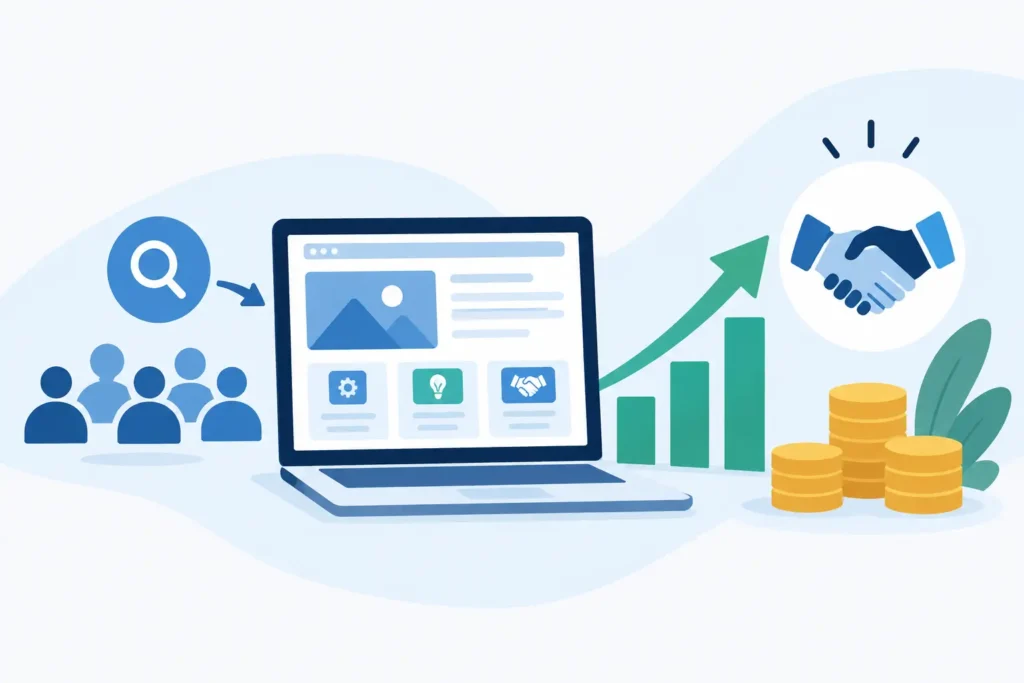
The best keyword strategy becomes a working operating system for organic growth, not a document that disappears after a planning meeting. When every target has a business purpose, a page owner, and a path to conversion, your website can keep attracting, converting, and scaling long after the initial work is published.