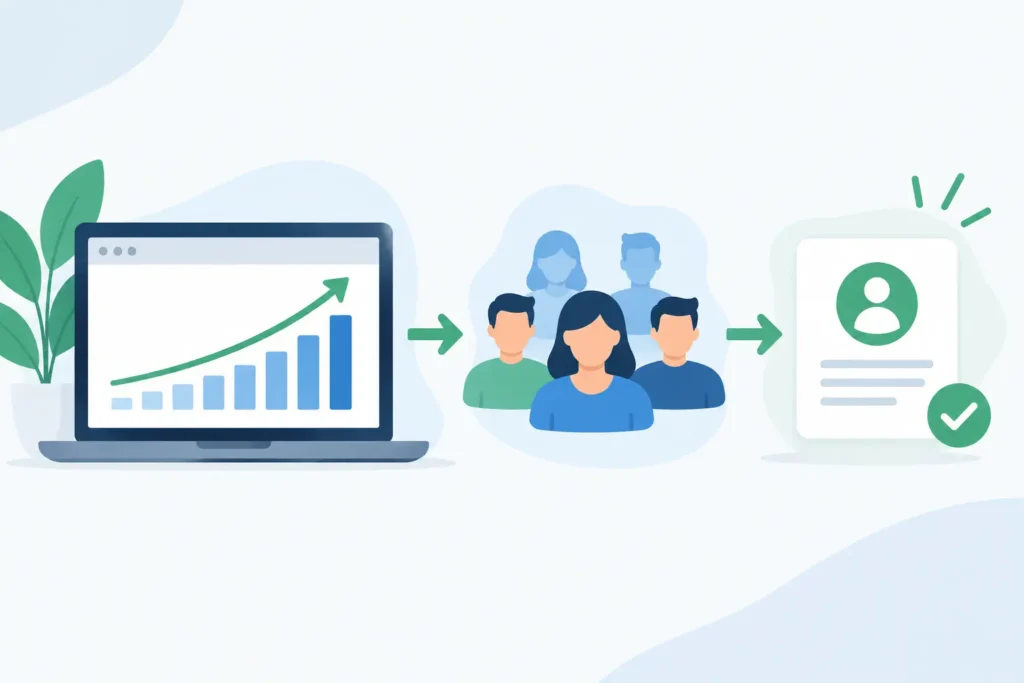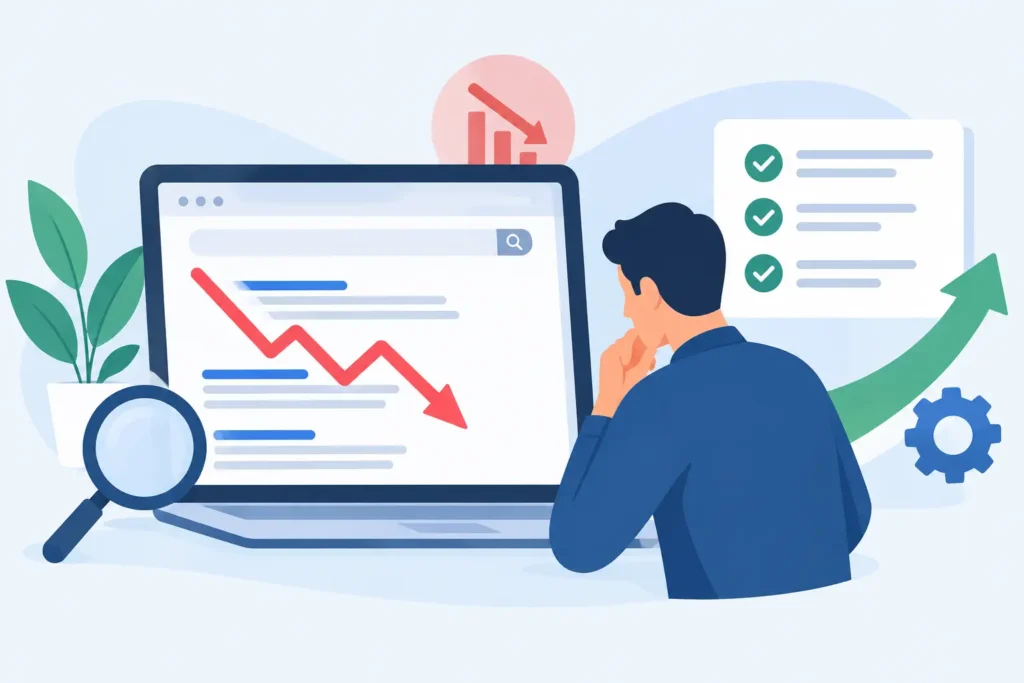

A website can rank, look credible, and still fail the commercial test: it does not create enough qualified sales conversations. That gap is where website development for lead generation earns its value. The job is not to publish a prettier digital brochure. It is to build a system that helps the right buyers find your business, understand the offer, trust the proof, and take the next practical step.
For growth-focused businesses, a lead-generating website sits at the intersection of search visibility, user experience, conversion strategy, analytics, and ongoing improvement. Treat any one of those as an afterthought and performance stalls. Build and grow them together, and the website becomes a compounding asset rather than a one-time expense.
A Lead Generation Website Starts With the Right Conversion
More form submissions do not automatically mean more revenue. A broad “contact us” call to action can generate a high volume of low-intent inquiries, especially for service businesses with specialized offers or higher deal values. The useful question is not simply, “How do we get more leads?” It is, “What action signals that a visitor is likely to become a valuable customer?”
That action depends on the business model. A B2B firm may prioritize booked discovery calls. A commercial contractor may need location-specific estimate requests. A software company may value demo requests from companies above a certain size. An ecommerce brand may focus on email capture before a first purchase, then use the data to improve repeat revenue.
Development decisions should follow that conversion definition. If a qualified lead requires a detailed project brief, the form needs enough fields to filter poor-fit requests without becoming a barrier. If speed to response determines who wins the deal, the website should route inquiries immediately to the right team and record the source in the CRM. If prospects need substantial confidence before speaking to sales, high-value pages need stronger proof, clearer process information, and relevant case studies before the call to action appears.
Build for Search Intent, Not Just Page Count
Organic traffic only contributes to pipeline when the pages attracting visitors match a commercial need. Publishing dozens of general articles can increase sessions while leaving lead quality unchanged. A focused content and website architecture connects the questions people search with the services, solutions, and next steps your company can deliver.
Start by mapping search intent across the buyer journey. Early-stage searches often seek explanations, comparisons, or planning guidance. Mid-funnel searches examine methods, costs, providers, or platform options. High-intent searches often include service terms, locations, industry requirements, and urgent problem language. Each deserves a different page experience.
A service page should make a direct business case: the problem solved, the scope of work, the outcomes expected, the process, relevant evidence, and a clear action. An educational article can capture earlier demand, but it should lead naturally toward a related service, assessment, or consultation when that next step fits the reader’s intent. For local and regional businesses, location pages must offer real market-specific value, not thin variations of the same copy with city names swapped out.
Technical SEO Is Part of Conversion Performance
A page that takes too long to load, breaks on mobile, or cannot be properly crawled is not merely a technical problem. It loses potential leads before your offer gets a fair chance. Speed, indexability, internal linking, structured data, clean URL logic, and reliable rendering are foundational development work.
Technical SEO also affects how efficiently a site can scale. When templates are inconsistent, redirects are unmanaged, or key pages sit too deep in the navigation, new content and campaigns take longer to deploy and often underperform. A well-built WordPress or Elementor implementation should give marketing teams appropriate flexibility while preserving the technical standards that protect performance.
The trade-off is real. Overly rigid systems slow down publishing and testing. Completely unrestricted page building creates design drift, bloated pages, and avoidable SEO issues. The answer is a governed component system: reusable sections, approved styles, clear templates, and a workflow for exceptions when a campaign needs something different.
Make the Offer Understandable in Seconds
Visitors do not arrive with the same context your internal team has. They need to understand what you do, who it is for, and why it matters without decoding vague marketing language. A headline that says “Innovative Solutions for Growth” does not answer those questions. A headline that identifies the audience, the outcome, and the category of service does.
Strong lead-generation pages organize information in the order buyers need it. First, establish relevance. Then explain the outcome and approach. Add proof that reduces perceived risk. Finally, make the next action feel clear and proportionate to the commitment.
Proof matters because most high-value purchases involve skepticism. Use specific case results where available, recognizable client categories, certifications, testimonials with meaningful detail, process visibility, and examples of the work. Generic claims such as “trusted experts” carry little weight on their own. Evidence tied to a real business outcome gives a visitor a reason to believe.
Calls to action should also match page intent. Asking a visitor to “Get Started” can work, but it is often less persuasive than an action that describes the value exchange: “Request a Growth Assessment,” “Get a Project Estimate,” or “Book a Strategy Call.” For lower-intent visitors, a useful guide, benchmark, or calculator may be the better conversion path. The goal is progression, not forcing every visitor into the same form.
Remove Friction From the Path to Contact
A conversion-focused site does not need aggressive pop-ups or endless buttons. It needs fewer reasons to hesitate. Common friction points include unclear pricing expectations, forms that appear broken on mobile, slow page loads, missing contact details, weak trust signals, and navigation that makes important information hard to find.
Review the path from a first search visit to a submitted inquiry. Can users quickly find the service relevant to them? Is the call to action visible after they have received enough context? Does the form explain what happens next? Does the confirmation message set an expectation for response time? Small improvements here often create meaningful gains without requiring more traffic.
Form design deserves special attention. Keep the first interaction focused on information the sales team will actually use. Asking for a budget range may improve qualification for some agencies and consultants, but it can discourage prospects who are still evaluating options. Requiring a phone number may be reasonable for urgent local services, while an email-first approach may work better for research-heavy B2B buying cycles. The right choice depends on lead value, sales capacity, and buyer behavior.
Connect Development to Measurement From Day One
Without reliable measurement, teams end up optimizing for opinions. Website development should include analytics architecture before launch, not after a disappointing quarter. Track form submissions, call clicks, booked meetings, ecommerce actions, newsletter signups, and other meaningful events. Then connect those events to channels, landing pages, devices, locations, and campaigns.
The most useful reporting goes beyond conversion totals. It shows where qualified demand enters, which pages assist conversion, how different traffic sources perform, and where visitors abandon the process. When possible, connect website data with CRM outcomes so the team can distinguish raw inquiries from sales-qualified opportunities and closed revenue.
This is where many one-time website projects fall short. A launch report may confirm that pages are live, but it cannot tell you what will improve pipeline over the next six months. The first version of a website is a starting point. Search rankings take time to build, audience behavior changes, new services emerge, and conversion opportunities reveal themselves through data.
Treat Launch as the Start of the Growth System
The highest-performing websites are actively developed after launch. Teams publish targeted content, improve internal linking, resolve technical issues, test page messages, refresh proof, refine forms, and use performance data to set the next priorities. Each improvement can support the others: stronger content attracts more relevant traffic, better pages convert more of it, and better conversion data sharpens future content decisions.
That is the operating model behind 3Q Studio’s approach to websites: foundation builds paired with the ongoing SEO, content, CRO, analytics, and technical support required to attract, convert, and scale. It creates accountability around business outcomes, not just a finished design file.
Not every business needs an advanced experimentation program on day one. A newer company may get the best return from a fast, credible site, clear service pages, baseline tracking, and a consistent content plan. An established brand with meaningful traffic but weak lead volume may need deeper conversion research, page testing, CRM integration, and segmentation. The priority should follow the largest constraint in the growth system.
A useful next step is to review your highest-traffic pages alongside your highest-value lead sources. If those two lists barely overlap, your website is likely generating attention without directing enough of it toward revenue. That is not a reason to start over blindly. It is a clear signal to build the next iteration around the buyer actions that matter most.